RTI Services In Rajasthan – All You Need To Know
The Right to Information (RTI) law in Rajasthan was introduced in 2000, making the state one of the pioneers in promoting transparency in governance. RTI empowers individuals to request information from public authorities and grants citizens the right to understand how the government functions, makes decisions, and uses public funds.
Rajasthan was among the first states in India to enact such legislation, preceding the national RTI Act that came into effect in 2005. The state played a crucial role in sparking the broader RTI movement across the country.
As a powerful tool for democratic engagement, RTI holds the government accountable and enables citizens to question its actions transparently and constructively. It upholds the principles of openness and accountability while actively involving the public in the workings of government.
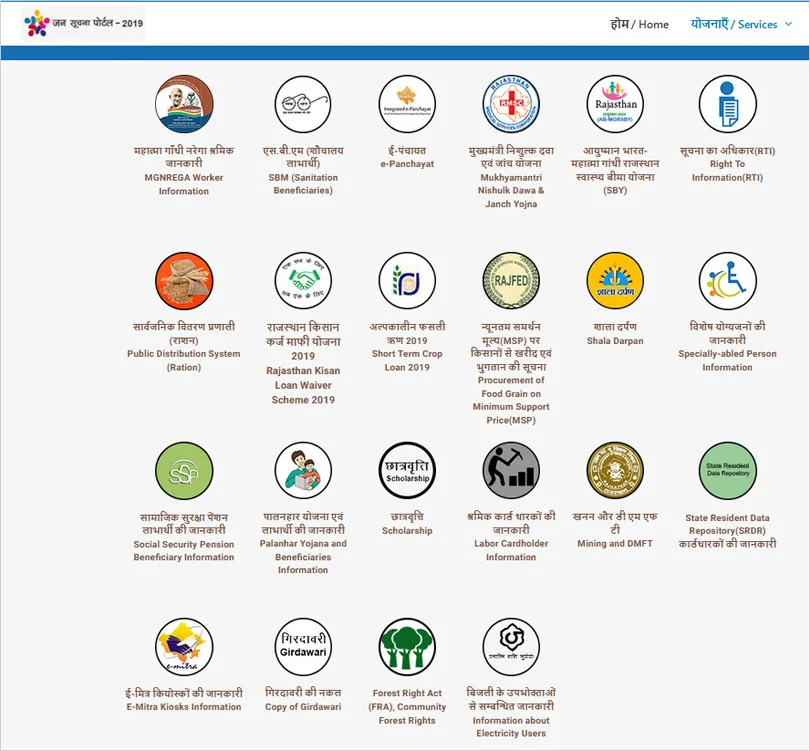
Key Features of RTI Services in Rajasthan
RTI services in Rajasthan are implemented under the national RTI Act of 2005. These services improve access to information from government offices and publicly funded organizations, promoting transparency and enhancing government accountability.
Key Characteristics
- Any person can request information from government offices or NGOs that receive public funding.
- The relevant office must provide the requested information within 30 days. If the request relates to a person’s life or physical safety, the response must be given within 48 hours.
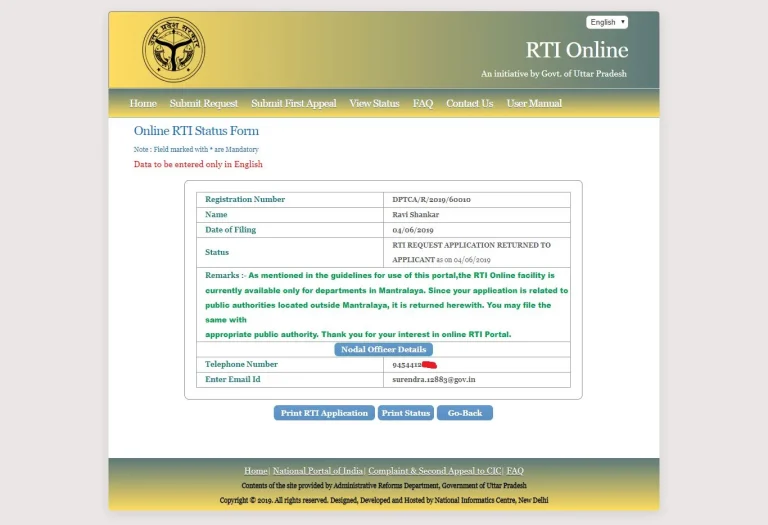
- Citizens can submit RTI applications through the official RTI portal of the Rajasthan Government and track their status online.
- The portal includes a directory of Public Information Officers (PIOs) and Appellate Authorities to help applicants direct their requests correctly.
- Government offices are required to publish key information proactively, without the need for formal requests.
- If an officer fails to respond to an RTI request without valid justification, they may face a penalty.
- If applicants are dissatisfied with the information provided, they have the right to file an appeal.
- The RTI law applies to all government departments and NGOs receiving public funds.
- Filing an RTI application requires only a minimal fee, making it affordable for everyone.
How to File an RTI in Rajasthan?
If you need information from a government department in Rajasthan, you can submit an RTI application either offline or online.
Offline Method (By Hand or Post)
- Address your application to the Public Information Officer (PIO) of the relevant department.
- You need to give your full name, address, contact details, and clearly explain what information you are asking for.
- Attach a ₹10 fee via postal order or court fee stamp. If you are below the poverty line (BPL), no fee is required, but you must attach a copy of your BPL card as proof.
- Send it by registered post, or submit it in person at the department’s office.
Online Method (Using the RTI Portal)
You can apply online through Rajasthan’s RTI portal: https://rti.rajasthan.gov.in
- Register or sign in
- Click on the “File RTI” option.
- Fill out the required details and upload necessary documents.
- Pay the ₹10 fee using net banking, a debit or credit card (BPL applicants are exempt with proof)
- Submit the application
Track Your RTI Application
After submission, you can track your application status using the same portal. Keep your application number safe for this purpose.
Rajasthan RTI Online Portal
The Rajasthan RTI Online Portal is a website that allows anyone to conveniently request government information from the comfort of their home. It is a valuable resource for citizens who wish to submit RTI applications without visiting a government office. Through the portal, you can submit your RTI request directly to any Rajasthan state government department, track the status of your application, and receive responses electronically or via email.
To use the RTI Online Portal, visit the official website: https://rti.rajasthan.gov.in. On the homepage, click on “File RTI Online.” If you are using the portal for the first time, you will need to register by providing your name, mobile number, and email address. If you have already registered, you can log in directly. Once logged in, fill out the online application form. Be sure to specify the information you are requesting from the government. You must then pay the ₹10 application fee online using net banking, a debit card, a credit card, or another available payment method.
If you are a below poverty line (BPL) applicant, you do not need to pay the application fee, but you must upload valid proof of your BPL status. After completing the form and payment, click “Submit.” You will receive an application number. Save this number carefully so you can track the status of your request on the same website.
The Rajasthan RTI portal makes the entire process fast, easy, and accessible. It is an effective way to obtain the information you need from the government.
RTI Formats and Templates
It is important to write your RTI application in the correct format. A structured, clear application helps you receive the information you need quickly and reduces the chances of delays or rejection.
Your RTI Application Should Contain
- This lets the Public Information Officer (PIO) know who is requesting the information and where the reply should be sent.
- Mention the department from which you are seeking information. If possible, include the name or office of the concerned PIO.
- Ask your questions straightforwardly and concisely. Avoid long or complicated language. Be specific about the dates, places, or topics related to your request.
- Attach a ₹10 postal order, court fee stamp, or pay the fee online. If you are a Below Poverty Line (BPL) applicant, you do not need to pay the fee, but you must attach a copy of your BPL card as proof.
Sample RTI Questions
- Please provide certified copies of land records about Khasra No. 123 in village Rampura for the year 2022–23.
- Please provide the list of beneficiaries from the XYZ welfare scheme for Gram Panchayat Sunderpur from January to December 2023.
Timeframes and Fees
When you apply for an RTI (Right to Information) in Rajasthan, you are required to pay a small fee, and there is a fixed time frame within which you will receive a reply.
RTI Application Fee
You must pay ₹10 for each RTI application.
This fee can be paid via postal order, court fee stamp, or online through the RTI Portal.
If you are a Below Poverty Line (BPL) applicant, you do not have to pay the fee. However, you must include a copy of your BPL card to qualify for the exemption.
Response Time (When Will You Get a Reply?)
- Normally, you will receive a reply within 30 days from the date the government office receives your application.
- If your application concerns life or physical safety, the reply must be provided within 48 hours.
- If you submitted your application through an Assistant Public Information Officer (APIO), you will receive a reply within 45 days.
Appeal Process
There may be instances where you receive no reply, or only an incomplete or vague response to your RTI application. If this happens, you have the right to appeal to obtain the correct information.
First Appeal – When and Where to File
If you did not receive a reply within the fixed time (30 or 45 days), or if the information provided is incomplete or unsatisfactory, you can file a First Appeal.
You must file your first appeal within 30 days of receiving the reply, or from the date the reply was due.
The appeal should be filed with the First Appellate Authority (FAA), who is usually a senior officer in the same department where you submitted your original RTI application.
First Appeal – What to Include
Ensure your First Appeal includes:
- A copy of your original RTI application
- A copy of the reply received (if any)
- A brief explanation of why you are dissatisfied or the reason for your appeal
- Your full name, address, and contact information
Second Appeal – When and Where to File
If you do not receive a response to your First Appeal, or if the response remains unsatisfactory, you may file a Second Appeal.
You must file the Second Appeal within 90 days of receiving the decision on your First Appeal, or from the date it was due.
This appeal should be submitted to the State Information Commission (SIC) of Rajasthan.
Second Appeal – What to Include
Include the following documents in your second appeal:
- A copy of your original RTI application
- A copy of your First Appeal
- Any replies or correspondence received
- A clear explanation of why you found the previous response unsatisfactory
Success Stories and Case Studies
The Right to Information (RTI) Act is an important tool that has been used by many ordinary citizens in Rajasthan to resolve issues and obtain justice. Below are some straightforward, real-life examples of how common people have used RTI to make a difference:
A Farmer in Ajmer
A farmer faced difficulties because someone else was using false documents to claim his land in the Ajmer district. He filed an RTI application to obtain the official land records from the government. When he received the records, they proved his rightful ownership of the land, and he was able to reclaim it. RTI helped him gather the necessary background details and facts of the case, ultimately stopping the fraud.
Students in Jaipur:
Some students in Jaipur faced issues related to the misallocation of scholarship funds. They filed an RTI application requesting the list of students who had received scholarships and the amounts paid. After reviewing the information, they found discrepancies, which led to the matter being raised and corrected.
A Widow in Bikaner
A widow in Bikaner was eligible for a pension but had not received it for several months. She filed an RTI application requesting details about her pension. The concerned department expedited the matter, and her pension was reissued once the RTI information brought the issue to light.
Challenges in RTI Implementation
Although the Right to Information (RTI) is beneficial, there are still issues with its implementation in Rajasthan. These problems often result in citizens not receiving the information they need promptly.
Delays in Responses
One of the main problems is that many government departments respond slowly to RTI applications. A citizen may submit an RTI request and wait for a month, only for the department to take several more months to respond, even though the law requires a reply within 30 days.
Lack of Awareness in Rural Areas
Many people in rural and remote areas are unaware of RTI and how to use it. This limits their ability to exercise their right to seek information from the government.
Poor Training of Officers
In some government departments, the Public Information Officers (PIOs) are poorly trained. They may not fully understand RTI rules and procedures, which leads to mistakes, delays, and improper handling of applications.
Technical Issues in the Online Portal
Sometimes, citizens face errors or difficulties while using the online RTI portal. The website may not function properly, making it hard to file RTI applications or track their status.
Suggestions to Improve RTI in Rajasthan
To enhance the effectiveness and accessibility of RTI services, here are some practical recommendations:
Regular Awareness Camps
Governments and civil society organizations should organize RTI awareness camps, especially in rural and remote areas. These events would educate people on how to file an RTI application and how the RTI process works.
Easy-to-Understand Applications in Local Languages
RTI application forms should be made available in local languages such as Hindi, Rajasthani, or Marwari. The simpler the language used in the application forms, the easier it will be for citizens to use them effectively.
Increased Training and Improved Coordination
PIOs and Appellate Authorities should receive proper training to handle RTI applications accurately and within the stipulated time. Additionally, there must be better coordination between departments to eliminate delays and prevent misinformation.
Conclusion
RTI services in Rajasthan are a major step towards good governance, transparency, and accountability. Whether you are a student, farmer, manual labourer, or entrepreneur, the RTI law gives you, as a citizen, the authority to ask questions and seek information from government offices. It ensures that the government is performing its duties properly.
When you understand how to use the RTI properly, you gain the ability to speak up, ask questions, and protect your rights. RTI is for everyone, and it enables you to actively participate in governance.